Technology
The whole process.
One plant.
Full control.
From process preparation to quality control.
Production preparation
Design first
production second
Before anything reaches the line, our process engineers work out the full manufacturing process for the part – from pouring simulation to tooling design.
Every process parameter is defined before series production starts.
- Pouring and solidification simulations (MAGMASOFT)
- CAD tooling design (Solid Edge)
- Feasibility analysis and geometry optimisation
- Verification of parameters before series roll‑out
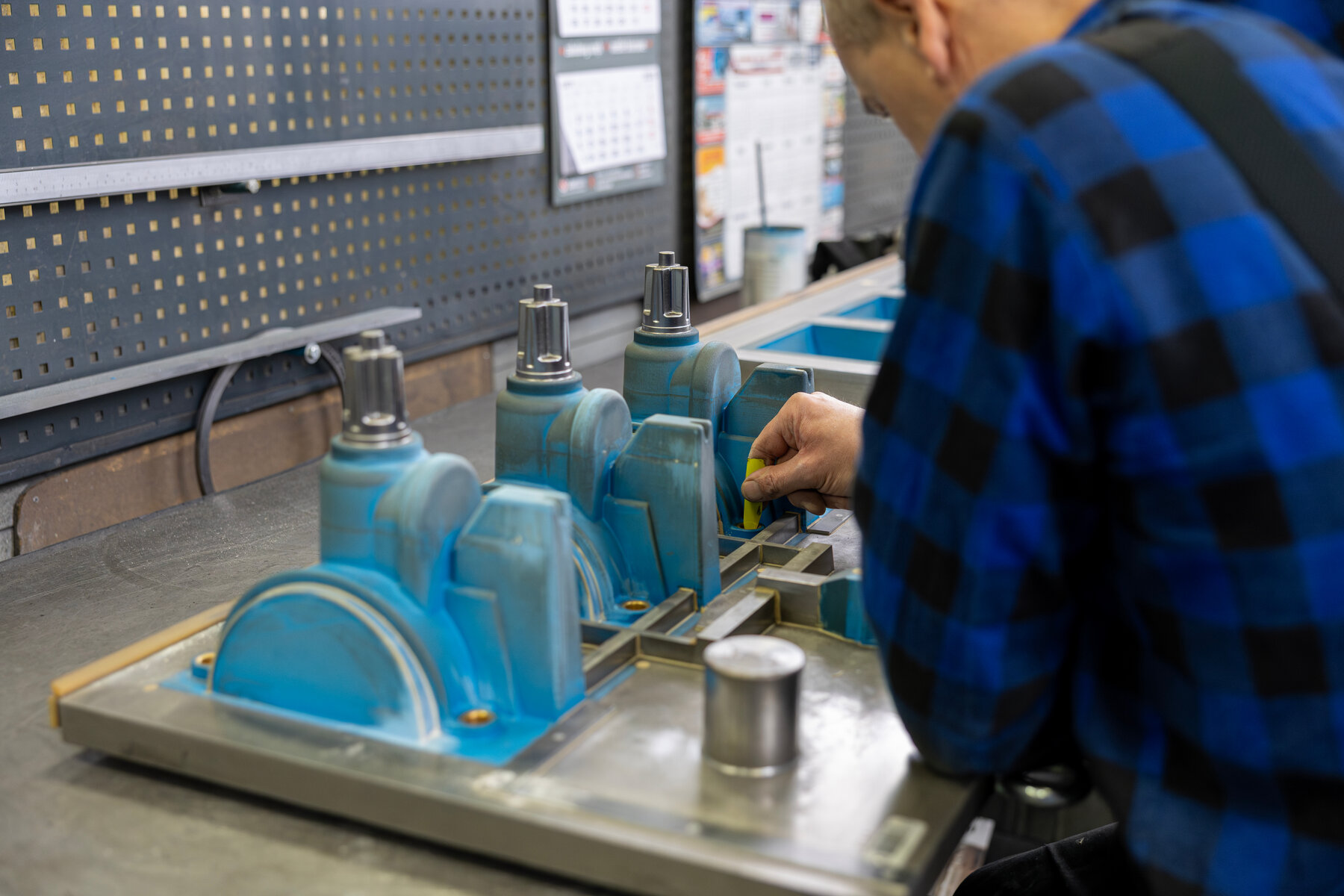
Pattern shop
The pattern defines the quality
The pattern shop combines craft experience with CNC technology. This is where the patterns and tooling are made that determine the accuracy and repeatability of every casting.
Every dimension is verified before the part goes into series production.
- CNC machining of wooden and resin patterns
- Steel and cast iron elements
- Adaptation of customer tooling
- Refurbishment and upgrading of patterns
- Geometry verification with a 3D scanner
Core shop
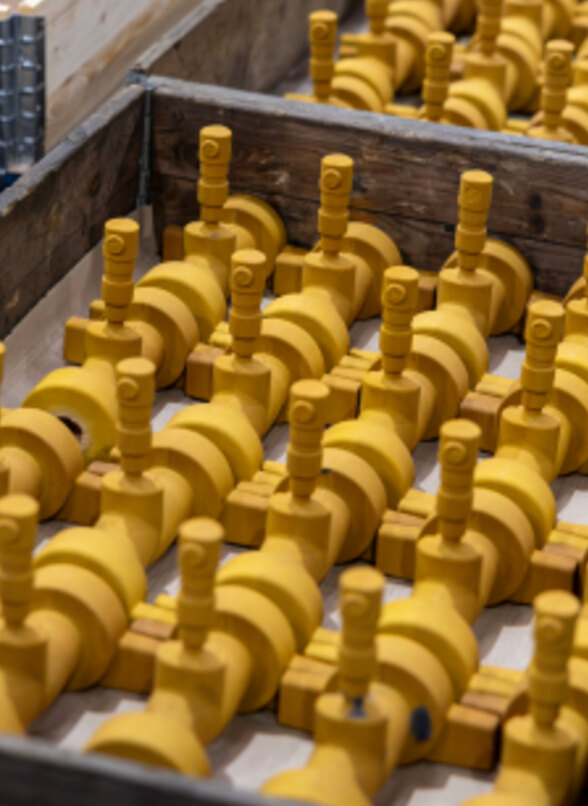
Control from the inside
The core defines the internal geometry of the casting – it directly affects the structure and strength of the finished component.
That is why we make cores in our own core shop, in Cold Box and Hot Box technology, with stable sand and curing parameters.
- Cold Box and Hot Box technology
- Automatic core making machines
- Repeatable internal geometry
- Monitoring of core sand parameters
- Stability of the curing process
Moulding shop
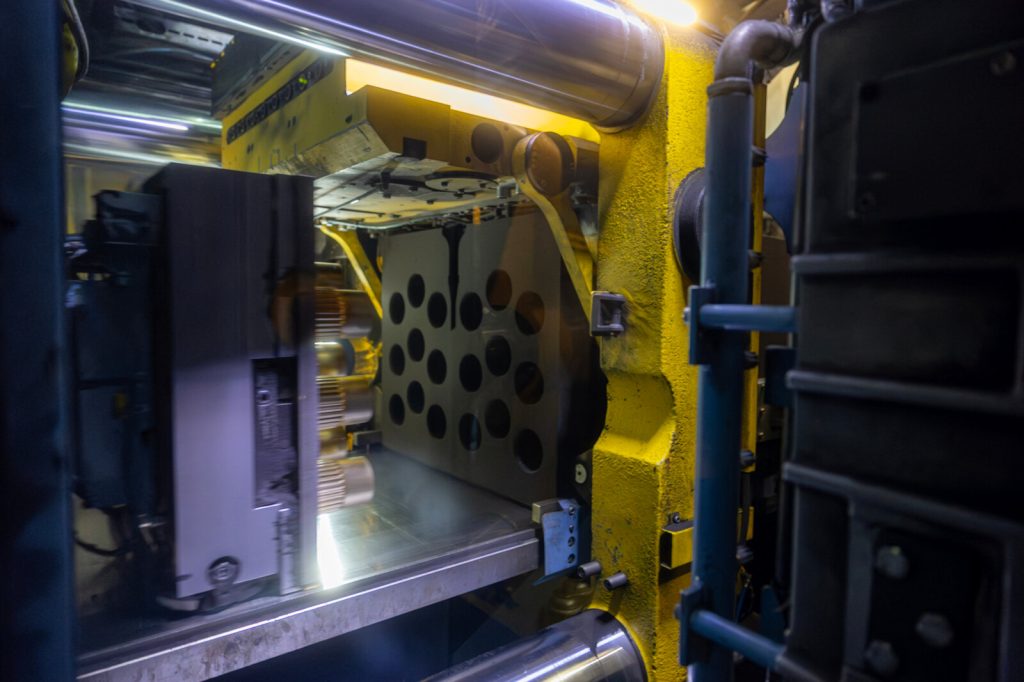
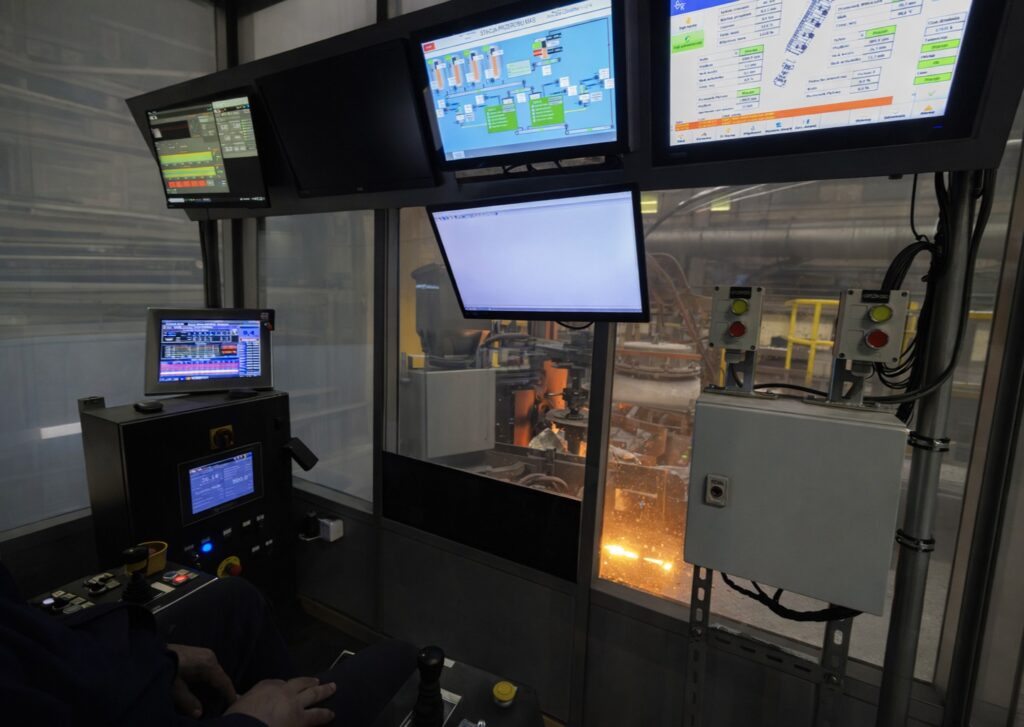
3 DISAMATIC lines
a continuous production cycle
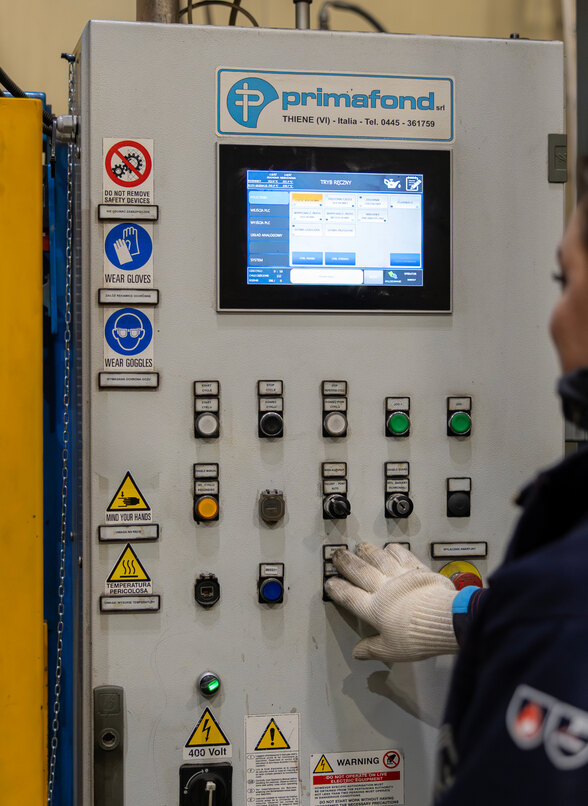
Moulding, pouring and parameter control – fully automated, on three flaskless DISAMATIC lines with a vertical mould parting.
Every cycle is monitored and logged in real time.
- Monitoring of temperature and process parameters
- Logging and control of production data
- 3 automatic DISAMATIC lines
- Flaskless moulding technology
- Automatic mould pouring systems
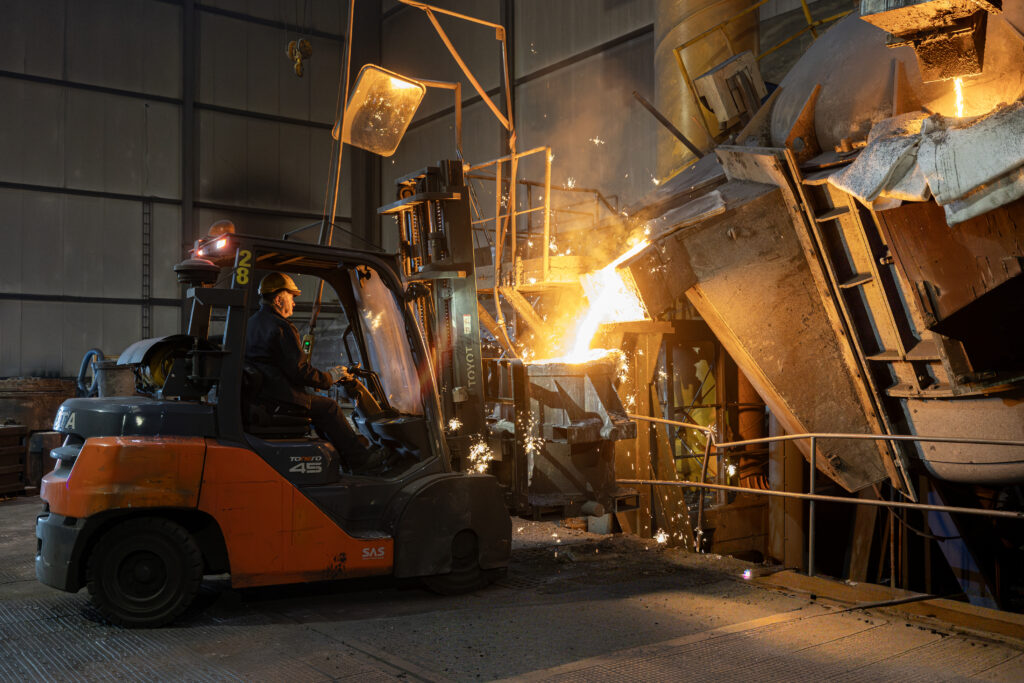
Melting shop
Precision at high temperature
The mechanical properties of a casting depend on the stability of the melt. We melt iron in a cupola furnace with automatic charging, and hold the molten metal in JUNKER furnaces, ensuring a constant supply of molten metal.
The chemical composition and temperature of the molten metal are continuously monitored, and ductile iron is produced at a dedicated spheroidization station.
- Cupola furnace with automatic charging
- 2 JUNKER holding furnaces – 90‑tonne capacity each
- Spheroidization station for ductile iron
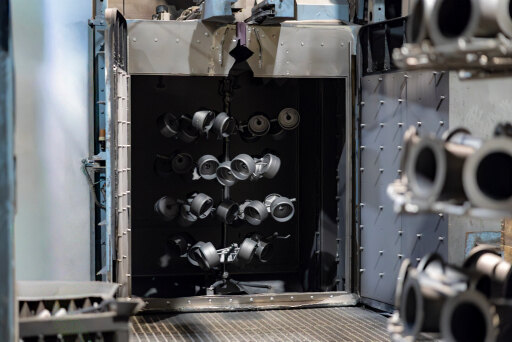
Fettling shop
Repeatable surface quality
After pouring, every part goes to the fettling shop. Automatic AGTOS shot blasting chambers remove moulding sand residue and feeders – under stable, repeatable conditions.
- Automatic AGTOS shot blasting chambers
- Abrasive blast cleaning
- Removal of feeders and moulding residue
- Uniform surface quality
- Stable process parameters
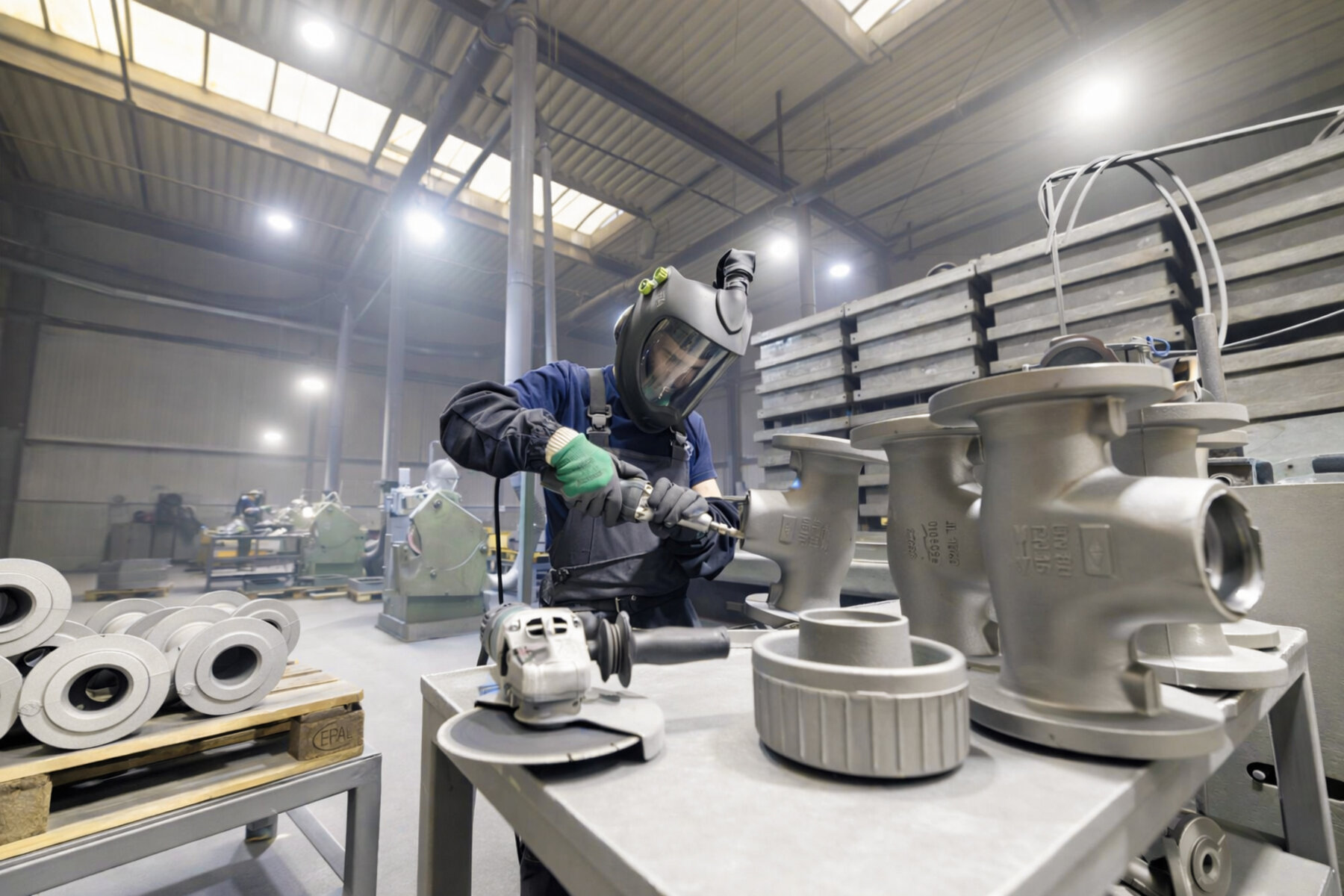
Finishing shop
A part that matches
the documentation
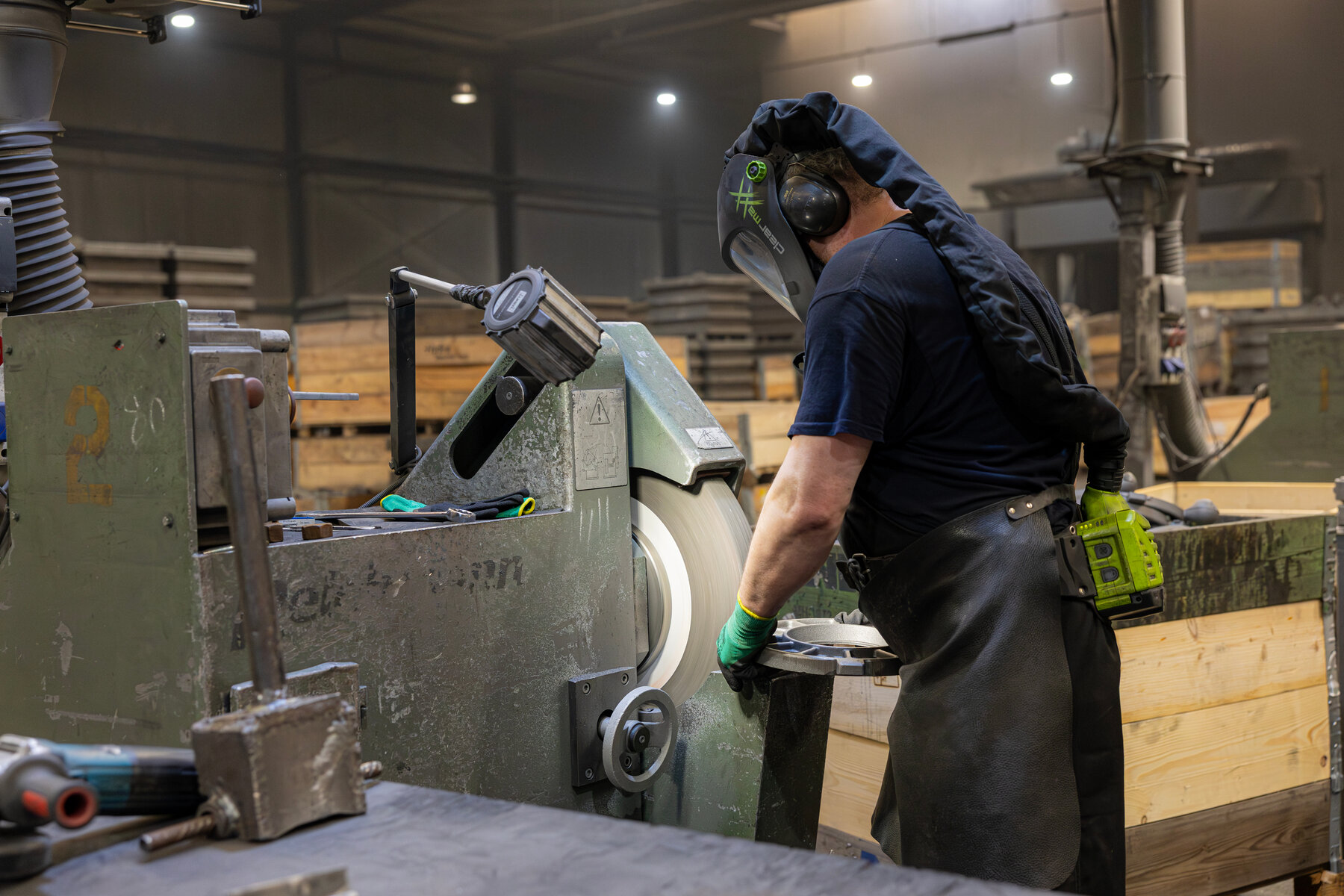
Final mechanical finishing and preparation of the part for assembly or machining.
Automatic CNC stations (Koyama) and controlled manual stations – every element is checked for conformity with the technical documentation.
- Automatic CNC grinding stations (Koyama)
- Manual work under controlled conditions
- Removal of feeders and flash
- Preparation for further machining
- Checking conformity with the documentation
Quality assurance
Quality under
full control
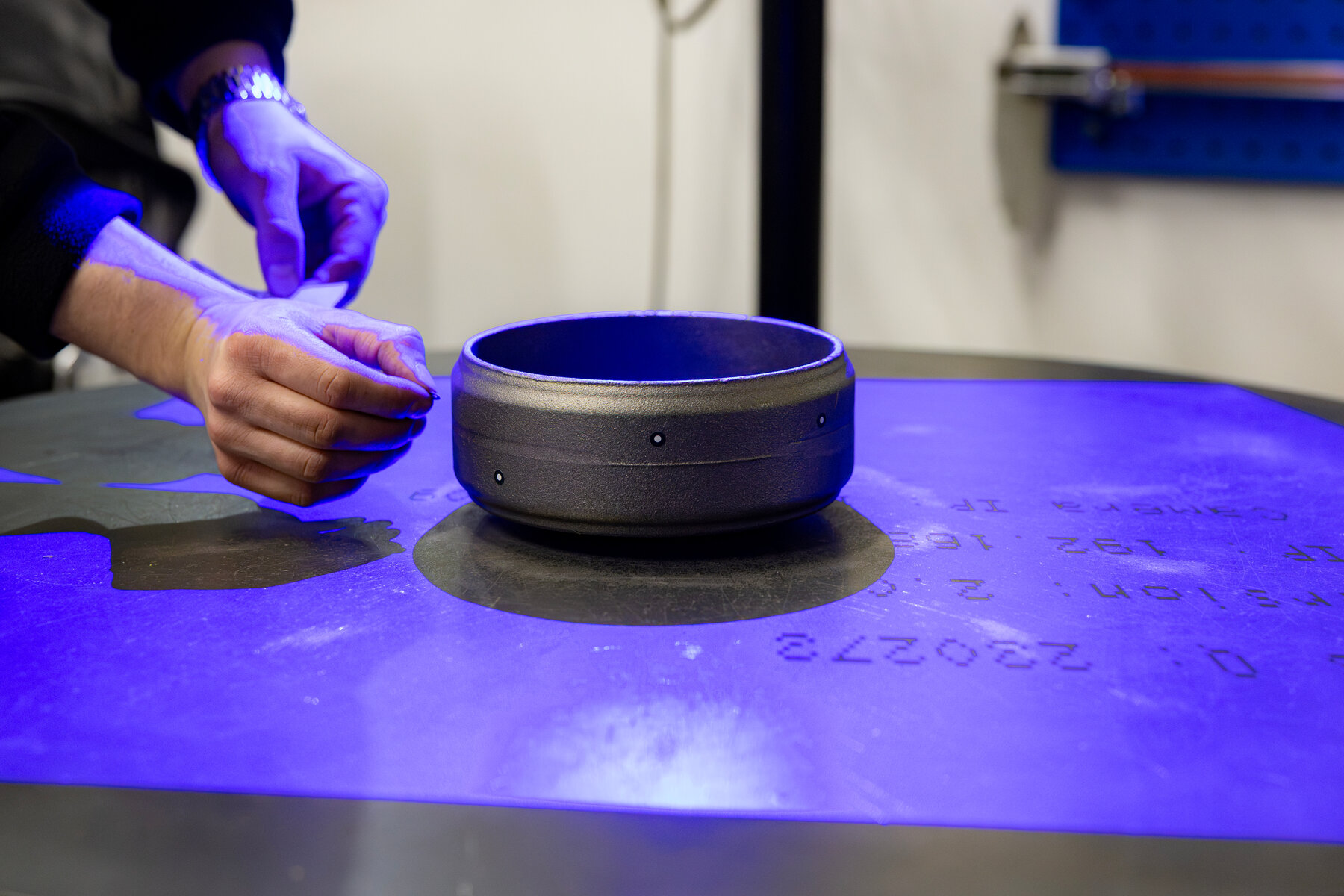
Inspection runs at every stage – from the chemical composition of the melt to the measurement of the finished part. The results go into the batch documentation.
- Materials laboratory
- ARL spectrometer for chemical analysis
- ZWICK testing machines
- ZEISS coordinate measurement
- In‑process and final inspection
- Process data logging
Machining
A casting ready
for assembly
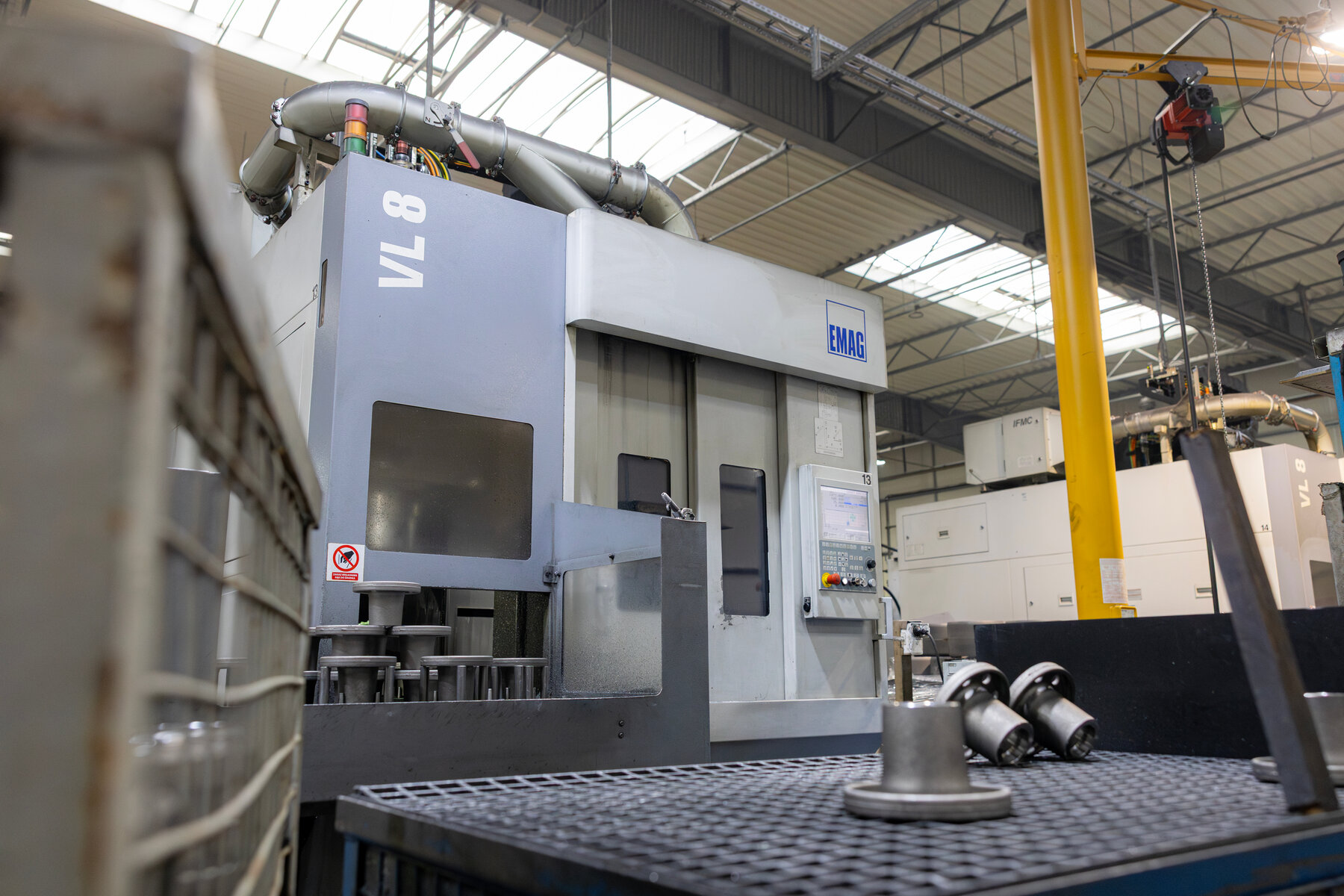
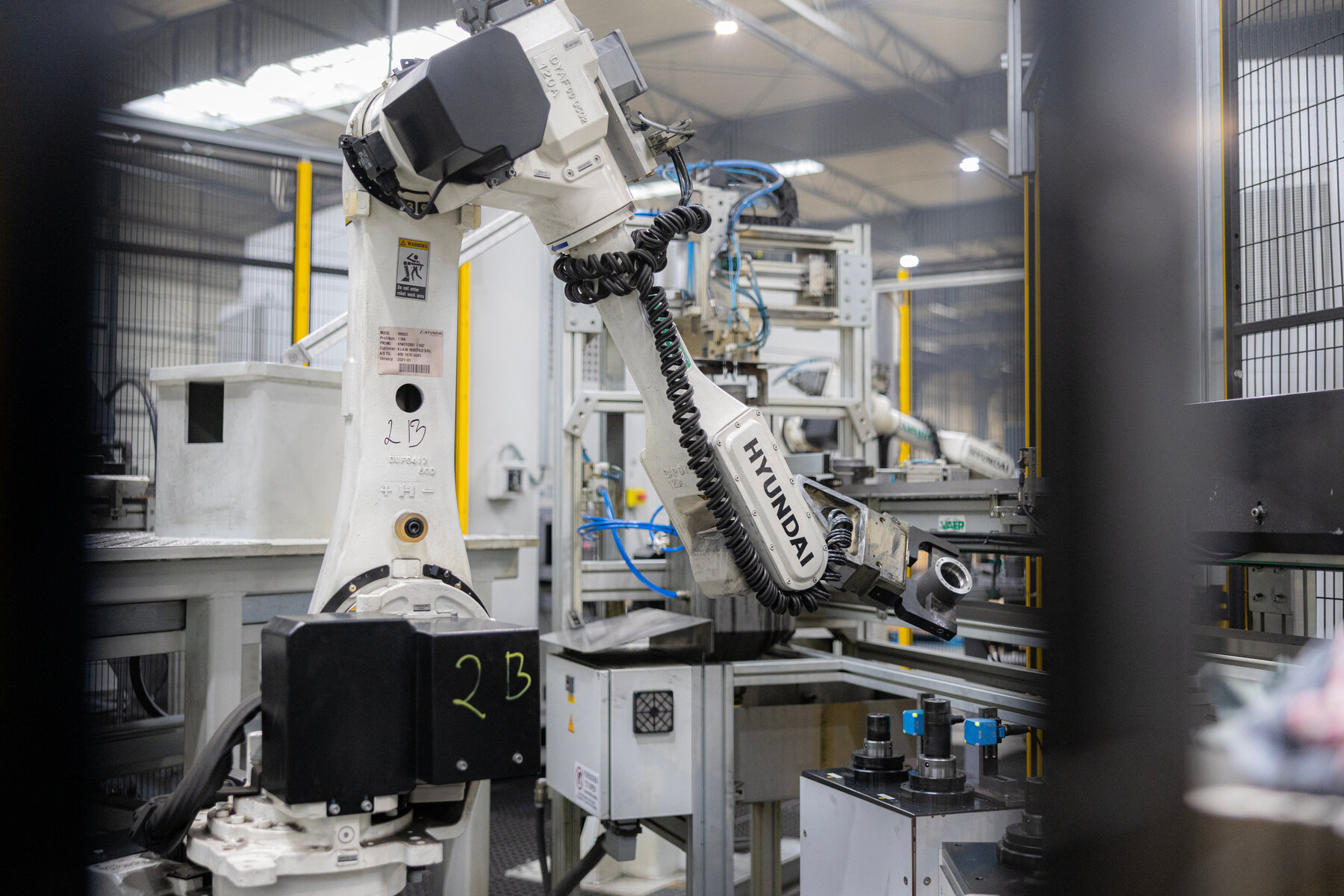
Our own machining department lets us carry out the final mechanical operations without subcontractors. We shorten the supply chain and reduce the operational risk on your side.
- SPC, Cp, Cpk monitoring
- Series and medium‑volume production
- EMAG turning centres (VL4, VL5, VL8)
- Hartford milling centres
- MARPOSS dimensional inspection systems
FAQ
Before you send
an enquiry
Which grades of cast iron do you produce?
Grey iron (EN‑GJL) and ductile iron (EN‑GJS) in various strength classes.
We do not produce castings in cast steel or aluminium.
What is the range of weights and dimensions?
We produce castings on DISAMATIC flaskless moulding lines with mould sizes of 675 × 550 mm and 1200 × 1050 mm — these dimensions define the size range of the castings. We produce castings up to 150 kg.
In what format should I send the documentation?
Ideally a 2D drawing or 3D model together with material requirements and quantity. We work primarily on customer‑supplied documentation, so the casting design is required for us to prepare a quotation.
Do you carry out machining?
Yes, we have our own CNC machining department — the part can reach the customer ready for assembly.
A system that works
A process contained
in one plant
Every stage – from process engineering to quality control – runs within one coherent production system.
The process is defined, monitored and predictable.
- We do not string together random subcontractors
- We do not pass responsibility between departments
- We do not improvise
Contact
Let’s start with an enquiry
Describe the project and the requirements. If you have documentation, attach the 2D/3D files. Our process engineering team will come back with a concrete answer.
Contact form
Prefer to write or call?
Requests for quotation
zapytania@lisiekaty.pl